Understanding odds is the single most important skill for any football bettor. Odds tell you two things: how much you can win relative to your stake, and how likely the bookmaker thinks an event is to happen. Getting comfortable with all three formats - decimal, fractional and American - makes you a better bettor and helps you spot value.
Decimal Odds
Decimal odds are the most common format used in the UK, Europe and most online bookmakers. They represent your total return per unit staked, including your stake back. So decimal odds of 3.00 mean that for every 1 you bet, you get 3.00 back - a profit of 2.00.
The formula for calculating return is simple: Stake x Decimal Odds = Total Return. A 10 bet at 3.00 returns 30.00, giving a profit of 20.00.
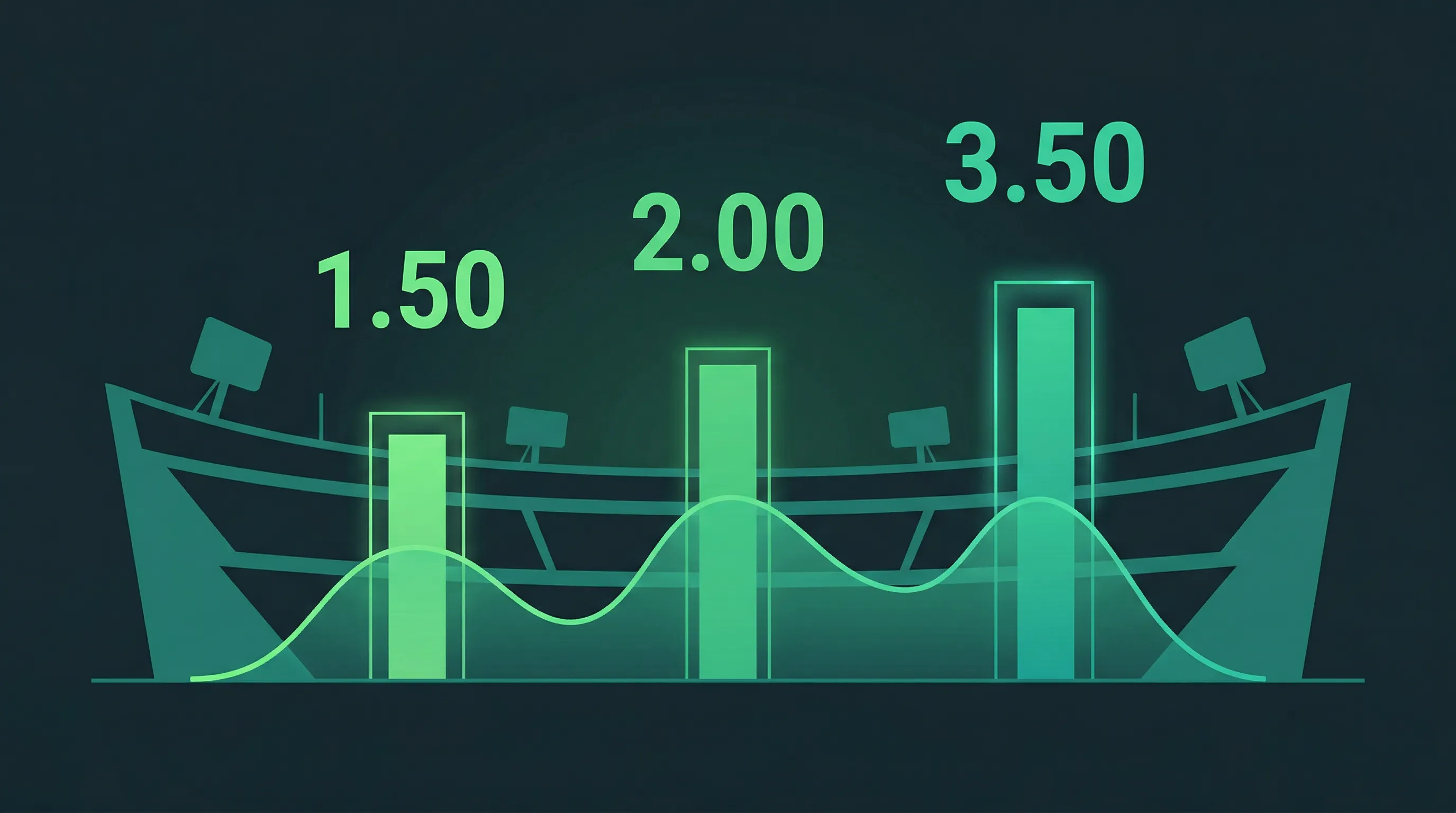
Decimal odds below 2.00 mean the selection is odds-on - the bookmaker prices it as more likely to happen than not. Odds of 1.50 mean you only profit 0.50 per 1 staked.
Fractional Odds
Fractional odds are the traditional UK format and are still used widely on racecourses and in older-style bookmakers. They express your profit relative to your stake, written as a fraction. Odds of 5/2 (pronounced "five to two") mean you profit 5 for every 2 staked.
To convert fractional to decimal: divide the top number by the bottom, then add 1. So 5/2 = 2.5 + 1 = 3.50 decimal.
Common fractional odds you will see: evens (1/1 = 2.00 decimal), 6/4 (2.50), 2/1 (3.00), 5/1 (6.00), 10/1 (11.00).
American (Moneyline) Odds
American odds are used primarily in the USA and shown as positive or negative numbers. Positive American odds (e.g. +200) show how much profit you make on a 100 stake. Negative American odds (e.g. -150) show how much you need to stake to make a 100 profit.
To convert positive American odds to decimal: divide by 100, then add 1. +200 = 3.00 decimal.
To convert negative American odds to decimal: divide 100 by the absolute value, then add 1. -150 = (100/150) + 1 = 1.67 decimal.
Use our odds converter tool to switch between all three formats instantly.
Implied Probability
Every set of odds implies a probability. To find the implied probability from decimal odds: divide 1 by the decimal odds. Odds of 4.00 imply a 25% chance (1/4 = 0.25 = 25%).
When you add up the implied probabilities of all outcomes in a market (home win, draw, away win), they add up to more than 100%. That gap above 100% is the bookmaker's margin - their built-in profit. A typical football 1X2 market has a margin of around 5-8%. Our margin calculator shows you exactly what margin a bookmaker is charging on any market.
Why Odds Change
Bookmakers constantly adjust odds based on betting patterns, news (injuries, team selection) and what other bookmakers are doing. When a market opens, the initial odds are set by the odds compiler. As money comes in, odds shorten on popular selections and drift on others.
Sharp bettors watch for odds movements that reveal market sentiment. If a team's odds drift significantly without obvious reason, it can suggest the bookmaker is nervous about liability. If odds tighten quickly, a lot of professional money may be going on that selection.
Using Odds to Find Value
A selection has value when you believe the true probability is higher than what the odds imply. If you think a team has a 40% chance of winning but the bookmaker prices them at implied 30%, that is a value bet. Read our value betting guide for a full breakdown of how to find and exploit value.
Odds Comparison
Getting the best available odds on each selection - known as "best price" or "line shopping" - is one of the most straightforward ways to improve your long-term returns. The difference between 2.00 and 2.10 on a selection sounds small, but compounded across hundreds of bets, it is significant. Always compare odds across bookmakers before placing a bet. Our bookmakers page lists the top operators and their typical football odds quality.